Torsion vs extension springs comes down to how the door is lifted, how smoothly it runs, and what level of safety and lifespan you can expect. Both types of garage door springs counterbalance the door’s weight, but they differ in mounting position, wear pattern, noise, maintenance needs, and replacement planning for Ontario homes and businesses.
For most properties, torsion springs are generally the more durable, controlled and widely preferred option, while extension springs may still suit some lighter or older garage door setups. In a torsion vs extension springs comparison, the right choice depends on the door’s size and weight, available headroom, hardware condition, daily use and whether you are repairing an existing system or planning a full upgrade.
How torsion vs extension springs work
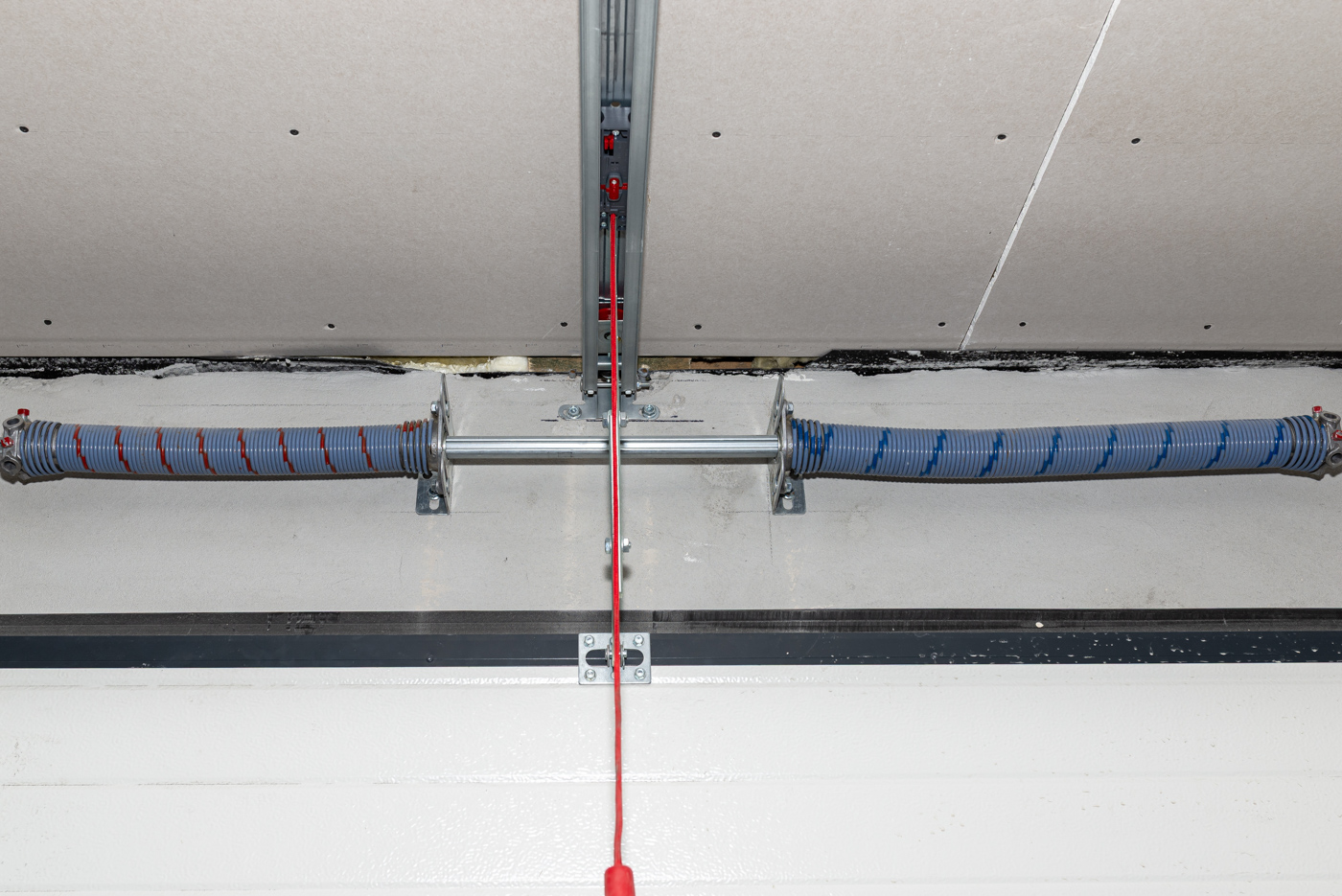
Torsion vs extension springs: a torsion spring twists on a shaft above the garage door opening, while an extension spring stretches along the horizontal tracks on each side. Both systems store energy to help lift and lower the door, but they do it in different ways and place different demands on the rest of the hardware.
What is a torsion spring?
A torsion spring is mounted on a metal shaft above the garage door. As the door closes, the spring winds up and stores tension; as the door opens, that tension is released in a controlled way to help lift the weight of the door.
This system is common on newer doors because it tends to provide smoother travel and more even force distribution. It also works well with heavier insulated doors, which are common in Ontario where energy efficiency and winter performance matter.
What is an extension spring?
An extension spring runs parallel to the horizontal tracks and stretches as the door closes. When the door opens, the spring contracts and helps pull the door upward through a system of pulleys and cables.
Older garages in Toronto, Mississauga and other GTA neighbourhoods may still have this setup, especially where the door has lower headroom or the original hardware was never updated. An extension spring system can still work effectively, but it usually has more moving parts that need regular inspection.
Main mechanical differences
- Mounting location: torsion springs sit above the door; extension springs sit beside the upper tracks.
- Movement: torsion springs twist; extension springs stretch.
- Hardware: extension systems rely more on pulleys and longer cables.
- Door balance: torsion systems often provide steadier, more even lifting force.
- Noise and vibration: extension systems may create more movement and rattling over time.
If your garage door is jerking, slamming, hanging unevenly or straining the opener, the issue may not be the spring alone. Worn rollers, bent tracks, loose hardware or poor balance can all affect performance, which is why a proper garage door repair assessment matters before parts are replaced.
Torsion vs extension springs: key differences for safety, lifespan and performance
When homeowners compare spring systems, the biggest concerns are usually safety, reliability and spring lifespan. Both types can fail with age and repeated cycles, but the way they wear and the way they affect the door system are not the same.
| Feature | Torsion spring | Extension spring |
|---|---|---|
| Operation | Twists on a shaft above the door | Stretches along the side tracks |
| Typical feel | Smoother, more controlled movement | Can be bouncier or less even |
| Best suited for | Heavier or frequently used doors | Lighter or older existing systems |
| Maintenance concerns | Spring tension and shaft components | Springs, pulleys, cables and alignment |
| Safety risk when damaged | High tension; professional service required | High tension; safety cables are essential |
Safety considerations
All garage door springs are under high tension and should be serviced by a trained technician. Never attempt DIY spring or cable adjustment. A broken spring can make the door unexpectedly heavy, and a door with damaged hardware may also affect the opener, auto-reverse function and safety sensors.
Extension systems should have containment or safety cables running through the springs. Without them, a broken spring may move dangerously when it snaps. Torsion systems are often considered more controlled in failure, but they still require professional handling and correct winding.
Spring lifespan and wear
Spring lifespan is usually measured in cycles, with one cycle meaning the door opens and closes once. Actual service life may vary depending on door weight, spring size, installation quality, corrosion, temperature swings and how often the garage is used.
Ontario winters can be hard on moving parts. Cold snaps may stiffen lubricants, road salt can speed up corrosion near the bottom of the door, and an unbalanced system can force the opener to work harder than it should. If the door is used as the main entry point, wear may build faster than many owners expect.
- Heavy insulated doors usually place more demand on springs.
- Frequent daily use shortens service intervals.
- Poor balance can wear out the opener and hardware sooner.
- Rust, noise and jerky movement often point to broader maintenance needs.
If a spring has broken, many technicians recommend replacing both springs on a two-spring system when they have aged together. The second spring may not be far behind, and a matched pair can help restore proper balance. For properties considering a larger upgrade, a technician may also suggest reviewing the full garage door installation options if the panels, tracks and opener are all near the end of service life.
Which spring system is more common today?
Torsion spring systems are more common on modern residential garage doors because they generally offer better balance, smoother operation and easier compatibility with heavier insulated doors. Extension systems are still found on many older garages and may remain serviceable if the hardware is in good condition and correctly maintained.
When a torsion setup often makes sense
- The door is large, insulated or used several times a day.
- You want steadier operation with less bounce and vibration.
- The opener seems to be straining under the current setup.
- You are already replacing major hardware components.
When an extension setup may still be kept
- The existing system is properly matched to a lighter door.
- Headroom or framing conditions limit conversion options.
- The rest of the hardware is in good shape and the door is balanced.
- A targeted repair is more practical than a full system change.
For homeowners in Toronto, Vaughan, Brampton, Markham or Richmond Hill, the best answer often comes from an on-site inspection rather than assumptions based on age alone. If you are unsure what type of spring system your door has, you can request a free estimate or send photos for a quick review.
Where safety upgrades or structural changes are involved, property owners should also follow local requirements; general permit guidance is available from Ontario.ca. For broader service information, Edge Home also provides garage door services across the GTA.
Cost factors and when conversion makes sense
The cost difference between spring systems depends more on the door and hardware than on the spring alone. In most cases, pricing varies based on door weight, spring size, whether cables or pulleys also need replacement, and whether you are repairing the existing setup or converting the whole counterbalance system.
What affects the price most
When comparing torsion vs extension springs, homeowners often expect a simple parts comparison. In practice, the bigger cost factors are labour, access, system condition and whether the opener, tracks or bearing components have also been affected by poor balance.
- Door size and weight: wider, taller and insulated doors usually need heavier-duty spring sizing.
- Single vs double door: larger openings may require more robust hardware and longer setup time.
- Existing hardware condition: worn cables, bent brackets, noisy rollers or damaged pulleys can add to the scope.
- Emergency timing: after-hours or urgent service may affect total cost.
- Conversion work: changing from an extension spring layout to a torsion system may involve new brackets, shaft components and recalibration.
In older garages in Toronto, Mississauga or Brampton, the spring problem may reveal other issues that were hidden by years of gradual wear. A door that has been running out of balance can put extra strain on the opener arm, hinges and track fasteners, so a proper inspection matters more than guessing from noise alone.
Is it worth converting from extension to torsion?
A conversion may be worth it when the door is used often, the current system is wearing unevenly, or multiple parts are already due for replacement. If the garage has suitable headroom and the rest of the door is in serviceable condition, upgrading may improve control, reduce vibration and simplify future maintenance.
That said, not every door needs a conversion. If an extension spring system is correctly matched to a lighter door and the hardware is still sound, a targeted repair may be the more practical choice. A technician can confirm whether the current setup is safe to keep or whether a full update would offer better value over time.
Repair or replace: how professionals make the call
The decision usually comes down to overall system condition, not just whether one spring has failed. A professional assessment looks at age, balance, corrosion, door weight, cable wear, opener stress and whether replacement parts can restore safe operation without chasing repeat problems.
When repair may be enough
- The door panels and frame are still solid and properly aligned.
- The issue is limited to worn springs or related hardware.
- The opener is still appropriate for the door weight and cycles.
- The tracks are secure and not significantly bent or twisted.
If the rest of the system is in good shape, replacing the failed components and rebalancing the door may be the most sensible route. This is common when the door is structurally sound and the problem has been caught before it caused wider damage.
When replacement or a broader upgrade may be smarter
- The door is older, heavy and showing repeated hardware failures.
- Panels are cracked, the bottom seal is failing, or weatherstripping no longer seals well.
- The opener is underpowered or no longer responds reliably after balance issues.
- The garage is drafty and you are already considering energy efficiency improvements.
Sometimes a spring issue is part of a larger upgrade decision. If the garage is attached to the home, poor sealing at the threshold and perimeter can also affect comfort inside. Homeowners planning broader improvements may want to review related door repair and replacement services or ask about exterior sealing details at the same time.
What the service process usually looks like
- Assessment: the technician checks spring type, door weight, balance, cables, rollers, tracks and opener response.
- Recommendation: you get a repair-versus-replacement explanation based on safety and long-term value.
- Parts matching: the correct spring rating and related hardware are selected for the actual door.
- Professional installation: springs are replaced, tension is set, and moving parts are checked.
- Final testing: the door is run through opening and closing cycles, and auto-reverse and safety sensors are verified.
If your garage door is part of a rental property turnover or a pre-sale upgrade in Vaughan, Markham or Richmond Hill, this kind of process helps avoid patchwork repairs that may need to be revisited shortly after move-in.
Common mistakes homeowners make with garage door springs
The most common mistake is treating a spring problem like a simple hardware swap. Garage door springs are part of a balanced lifting system. Replacing the wrong part, using the wrong spring size or forcing the opener to compensate can make the door less safe and more expensive to fix later.
Problems that often make things worse
- Continuing to use the opener after a spring breaks.
- Replacing only one worn component without checking the full system.
- Ignoring frayed cables, loose brackets or track movement.
- Skipping seasonal lubrication and general maintenance.
- Trying to adjust spring tension without proper training and tools.
Another common issue is overlooking signs that seem minor at first: a louder opener, a crooked closing line, or a door that hesitates near the floor. Those symptoms may point to imbalance, worn rollers or track drag, not just one broken part.
Seasonal checks that help in Ontario
Ontario weather puts extra stress on moving hardware. A simple seasonal inspection can help catch wear before the door gets stuck during a cold snap.
- Watch for rust, gaps and cracking around the bottom seal and weatherstripping.
- Listen for grinding, popping or rattling during operation.
- Keep the threshold area clear of ice, packed snow and debris.
- Test opener response and confirm the safety sensors are clean and aligned.
- Book service if the door feels heavier than usual or does not stay balanced.
For owners planning wider property updates, Edge Home can also coordinate related work through its home improvement services, including repairs that affect safety, comfort and curb appeal. If winter drafts are also a concern, it may be worth reviewing window repair and replacement options for older sealed unit or double-pane glass issues elsewhere in the home.
Choosing the right spring system for long-term reliability
In a practical torsion vs extension springs decision, the best choice depends on how the door is used, how much of the existing hardware can be kept, and whether you want the most durable setup or the most economical short-term repair. A torsion spring often suits heavier, frequently used doors, while an extension spring may still be reasonable on some lighter existing systems when the hardware is in good condition.
If your garage door is noisy, uneven, slow to open or hard on the opener, a professional inspection is the safest next step. Edge Home provides free estimates across the GTA for garage doors, doors and windows, locksmith work and general home improvement. You can call to book an on-site visit or send photos of the door, window or lock for a quick quote.
Frequently Asked Questions
What is the main difference between torsion vs extension springs on a garage door?
The main difference is how the springs store lifting force: a torsion spring twists above the door, while an extension spring stretches along the side tracks. Torsion systems usually provide smoother, more controlled movement, while extension systems are more common on some older or lighter garage doors.
How much does it cost to replace garage door springs in Toronto or the GTA?
The cost varies depending on spring type, door weight, hardware condition and whether related parts need repair. A simple spring replacement is different from replacing cables, pulleys, brackets or converting from extension to torsion. Edge Home can provide a free estimate on site or from photos.
How do I know if my torsion spring or extension spring is broken?
A broken spring often makes the garage door feel very heavy, uneven, noisy or unable to open properly. You may also notice a visible gap in a torsion spring or loose-looking cables. Stop using the opener and call a trained technician, because springs and cables are under high tension.
Which garage door springs last longer, torsion or extension?
Torsion springs typically offer a longer and smoother service life than extension springs, depending on the product, installation and use. Spring lifespan is usually measured in open-and-close cycles. Heavy doors, frequent daily use, corrosion, poor balance and Ontario winter conditions can all shorten service intervals.
Is it worth converting from extension springs to a torsion spring system?
Converting may be worth it if the door is used often, feels bouncy, strains the opener or needs several hardware repairs. A torsion spring system can improve control and balance when the garage has suitable headroom. However, a well-matched extension setup may still be practical on lighter doors.
Can cold Ontario weather affect garage door springs and hardware?
Yes, cold weather can affect garage door springs, rollers, cables, seals and opener performance. Temperature swings may stiffen lubricants, while road salt and moisture can speed up corrosion. Seasonal checks are useful if the door becomes louder, moves unevenly, sticks near the floor or feels heavier than usual.